
Dairy History of New Zealand
Since the early 1800s the dairy industry in New Zealand has gone from farmers keeping a few domestic cows on bush blocks to being a world leader.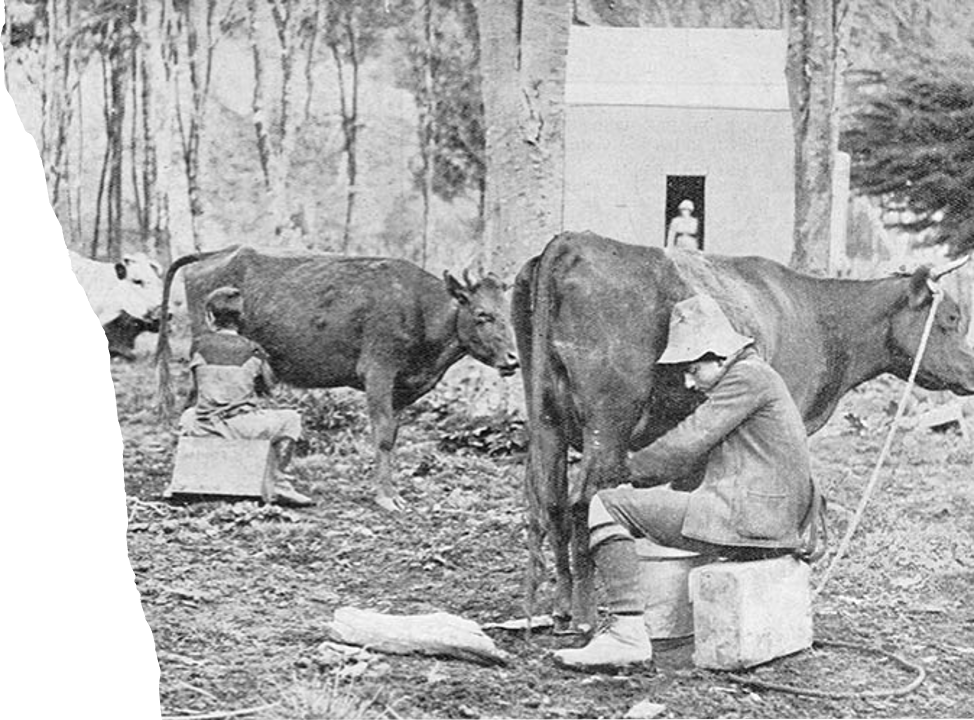
In 1814 the first dairy cows arrived in New Zealand.
Initially, herds were small, but were larger near towns, where milk, butter and cheese could be sold. All settlements had dairy cows, each family usually keeping one or two to provide its dairy needs. Women and children generally had the task of milking, which they did in a paddock.
From the early 1880s refrigeration made it possible to export more dairy products.
The first dairy factories in New Zealand were opened in the mid-1880s to process whole milk. The most successful factories made both butter and cheese and could adapt to changing supply and demand. The success of entrepreneurs encouraged the establishment of cooperatively owned factories.
In 1894 the government introduced the Dairy Industry Act, under which goods were graded for export and payment for milk was based on factory inspection. The number of factories peaked at about 600 in 1920 – about 85% of which were cooperatives. Cooperatives merged until, in the late 2000s, only three remained.
Milking Sheds
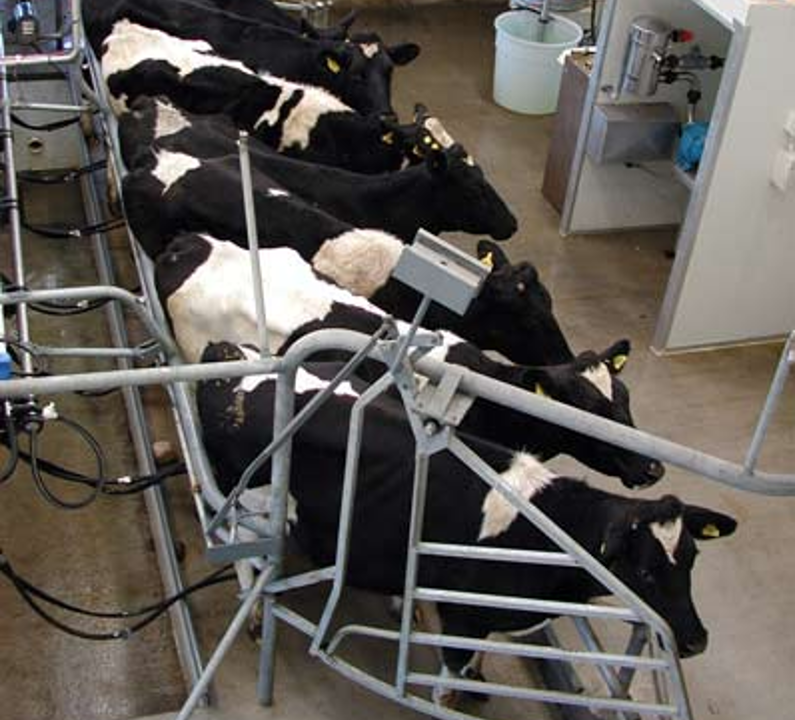
Early dairy sheds had rough floors of earth or stone, often with poor drainage. A need for improvement led to the passing of the Dairy Industry Act 1908.
Cows were milked in stalls or bails. In the 1950’s a farmer combined the pit parlour with angled cow positions and called it the herringbone system, because when viewed from above it resembled a fish skeleton. In 2000 the design was still popular in New Zealand and around the world. Another NZ farmer invented the rotary milking platform in the late 1960s where cows walk on and are milked by operators during one rotation.
Farming
Dairy farms proliferated in the early 20th century as bush was cleared, land drained, and pasture improved with superphosphate fertiliser and faster-growing grasses and clovers.
Dairying was developed in regions where rainfall was reliable, and winters were warmer. Farms were small, usually near factories, and could graze two cows per hectare.
Only 10% of the world’s dairy cows live solely on grazed pasture. This is an important advantage of the New Zealand dairy industry. New Zealand has a climate that, in most regions, grows grass year-round, and is mild enough that cows can be kept outside in all seasons.
New Zealand farmers use fencing to ration pastures, making sure cows receive the required daily allowance but not too much.
In the 1930s low-voltage electric fencing for farming was invented in New Zealand, which is used to divide paddocks into strips that are grazed between milkings.
Farmers who know the total pasture area, the growth rate of grass and clover, the numbers of cows and their requirements, can devise a grazing rotation over the farm to prevent a shortage of feed and maximise milk yield. Any surplus grass in spring, which is when grass grows fastest, is made into silage in pits, stacks or bags, and stored to supplement winter feed.
In spring, pastures grow most rapidly, and cows produce the most milk. Cows are mated to produce their calves in mid- to late winter, so that they lactate during the peak season. On seasonal-supply farms, daily milk flows slowly diminish until cows ‘dry off’ in autumn, and they are not milked from May to July.
Dairy companies must have enough transport and processing equipment to handle the peak in November. Every day the perishable milk must be converted into cool-stored products like powders and cheeses.
Traditionally, milking was done twice daily, but a few farmers now milk their cows only once a day.
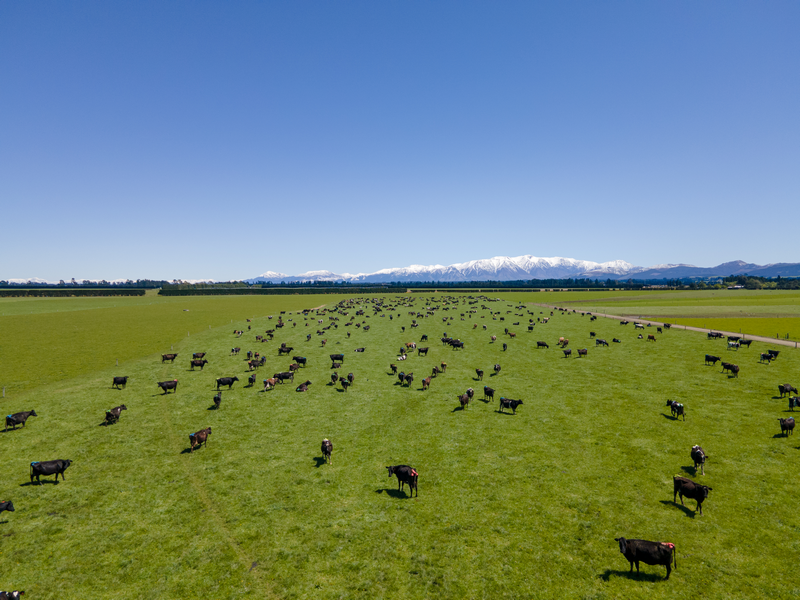 By 2007, farms were twice as large as they were in the early 1990s, at an average of 118 hectares, with a stocking rate of 2.7 cows per hectare.
New Zealand dairy farms usually have two full-time workers, mostly family members. Sometimes the sharemilker is a son or daughter of the owner.
Many young New Zealanders have followed the sharemilking route into farm ownership. It begins with practical training as a farm worker, followed by responsibility as a herd manager, and then cow ownership and sharemilking. The farm owner, usually an older and experienced dairy industry operator, offers a contract of one to five years to a sharemilker who owns all or part of the herd, operates the farm, and shares the income. They have equal share of the revenue in the common ‘50% sharemilker agreement’.
Theland Farm Group
There are currently 25 farms in the Group, 14 in the North Island of New Zealand and 11 in the South Island of New Zealand. The group is milking nearly 30,000 cows producing 100,000,000 Litres of Milk per year.